
Texas Police Records
Texas police records are public documents held by law enforcement agencies across all 254 counties. You can search for arrest records, incident reports, and jail booking data through the Texas Department of Public Safety or your local sheriff's office and police department. The state runs the Computerized Criminal History system, which stores conviction data going back to 1975. County sheriff's offices keep jail records and booking logs. City police departments hold incident and accident reports at their own records divisions. If you need to find police records in Texas, this page covers where to look, what you can get, what it costs, and how the process works at every level.
Texas Police Records Overview
Texas DPS Police Records Search
The Crime Records Division at the Texas Department of Public Safety is the main state agency for criminal history data. It runs the Computerized Criminal History system, which is the statewide repository for criminal history record information reported by local agencies. The CCH holds over 15 million conviction records. DPS processes more than 2 million criminal history inquiries each year from the public, licensing agencies, and other authorized users.
Public access through DPS is limited to conviction information and deferred adjudication records only. Arrest records without a final conviction are not public through this system. You can run a name-based search by creating an account at the DPS public site. Each search costs $3.00 per credit plus transaction fees. Fingerprint-based checks cost $25.00, which covers the $10 fingerprint fee and $15 search cost. The DPS Crime Records Division also runs the Multimodal Biometric Identification System for fingerprint-based identification.
The DPS Crime Records portal at the Texas Department of Public Safety provides access to conviction data stored in the Computerized Criminal History system.
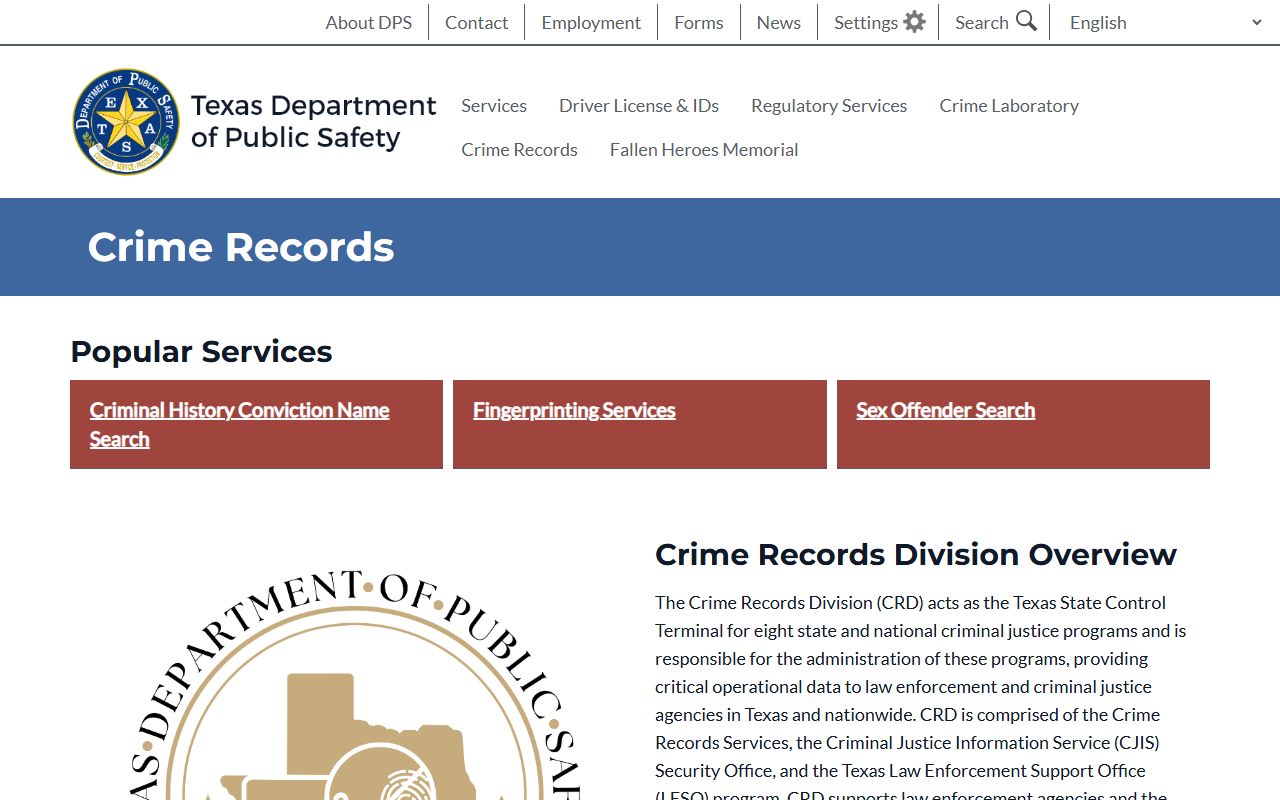
This portal lets you search by name and date of birth. You purchase credits with a credit card and then run your search.
To search police records through DPS, you need at least a last name. Date of birth helps narrow results. You buy search credits, enter your criteria, review matches, and then purchase the detailed report for any confirmed match. For help with the search tool, call 1-855-481-7070. If you find an error in your record, contact the Record Error Resolution office at (512) 424-7256.
DPS also keeps the Texas Public Sex Offender Registry with over 100,000 registered offenders. That search is free. You can look up offenders by name, address, or map radius. The Uniform Crime Reporting program at DPS collects crime data from over 1,000 Texas law enforcement agencies, which feeds into national crime statistics.
Note: DPS criminal history searches only return conviction records and deferred adjudications. Arrests without convictions do not show up in the public search.
TDCJ Offender and Inmate Records
The Texas Department of Criminal Justice holds custody of about 130,000 inmates in state prisons, state jails, and treatment facilities. Their online Offender Information Search shows location, offenses, and projected release dates for current inmates. You can search by name, TDCJ number, or State Identification number. The database also has historical records for inmates released after 1980. Data is updated nightly from the TDCJ Offender Management Information System.
The TDCJ offender search portal shows current incarceration status, facility location, offense history, and sentence details for inmates in the Texas prison system.
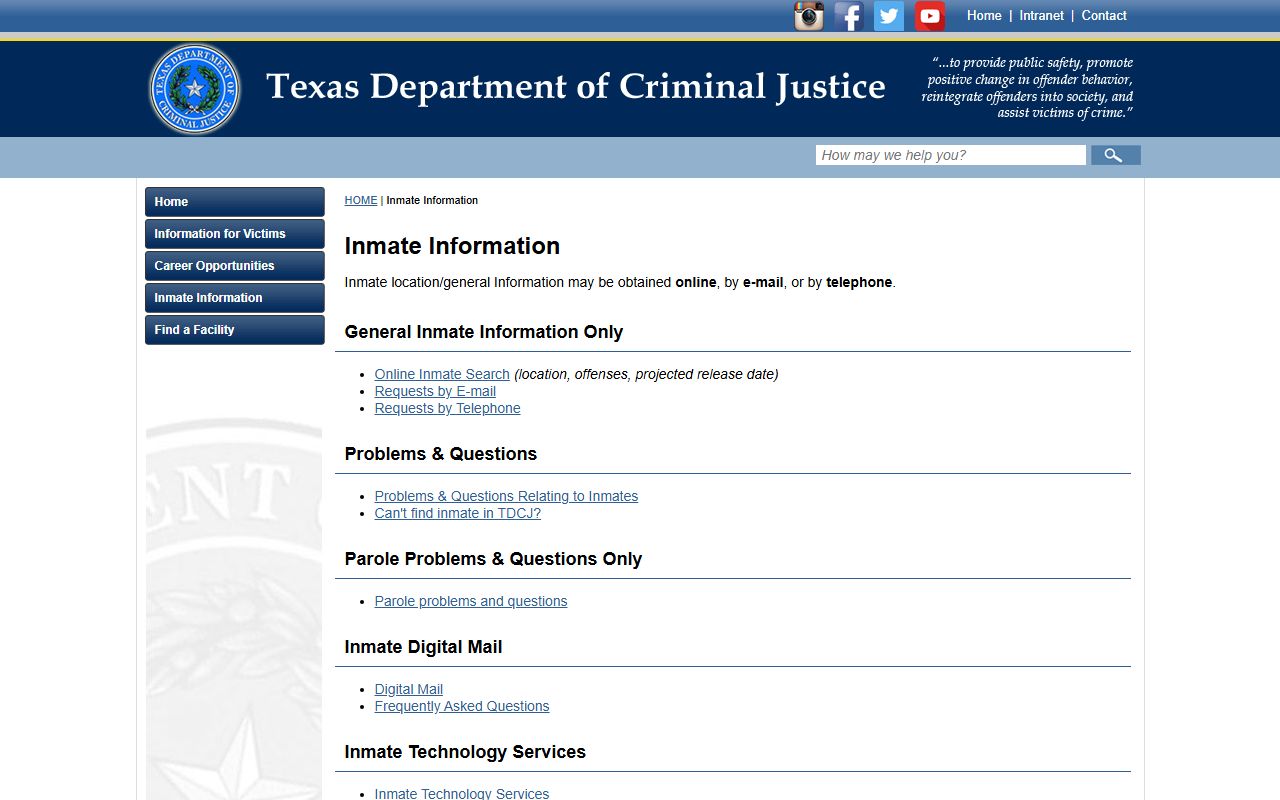
Search results show the inmate's name, TDCJ number, SID, race, sex, date of birth, projected release date, and current facility assignment.
TDCJ does not provide mugshots through the online search. Victim notification is available through the Texas Victim Notification System. TDCJ facilities are organized into 6 regions across Texas with headquarters in Huntsville. The search is available in English and Spanish. Contact TDCJ at (936) 295-6371 or email tdcj.ois@tdcj.texas.gov for questions about offender information.
The TDCJ Inmate Search Portal is the direct way to look up anyone currently in state custody. It is free and does not need an account. The portal provides real-time data on inmates held in TDCJ facilities statewide.
Texas Police Records and Public Access Laws
The Texas Public Information Act under Government Code Chapter 552 gives the public the right to request records from any government body, including police departments and sheriff's offices. You do not need to give a reason for your request. Agencies must respond promptly, which courts generally interpret as within 10 business days.
The Texas Attorney General's Open Government page provides guidance on submitting public information requests and explains your rights under Texas law.

This site has sample request letters, FAQs, and the full text of the Public Information Act Handbook.
Standard copy fees are $0.10 per page for letter size and $0.15 for legal size. The first 50 pages are free if the records sit in a single location and don't need much work to pull. Labor charges run $15.00 per hour for general staff. If the total cost goes over $40, the agency must give you an itemized estimate first. CDs cost $1.00 and DVDs cost $3.00. You can call the AG's open government hotline at (512) 478-6736 or toll-free at 1-877-673-6839 with questions.
Common exceptions to disclosure include pending criminal investigations, certain law enforcement records, and personnel files. If an agency denies your request, they must seek an Attorney General opinion within 10 business days. The AG then has 45 working days to rule on whether the information must be released. You can appeal AG rulings to state district court within 30 days. Officials who intentionally hide public records face criminal penalties under the Act.
Texas Police Crash and Accident Reports
The TxDOT Crash Records Information System is the official Texas repository for all police-reported motor vehicle crashes. It holds over 20 million crash reports. Under Texas Transportation Code Section 550.065, officers must file crash reports within 10 days of the investigation. Reports stay confidential for the first 60 days. After that, they become public with some redactions.
The TxDOT CRIS portal lets you search for and purchase crash reports filed by any Texas law enforcement agency.
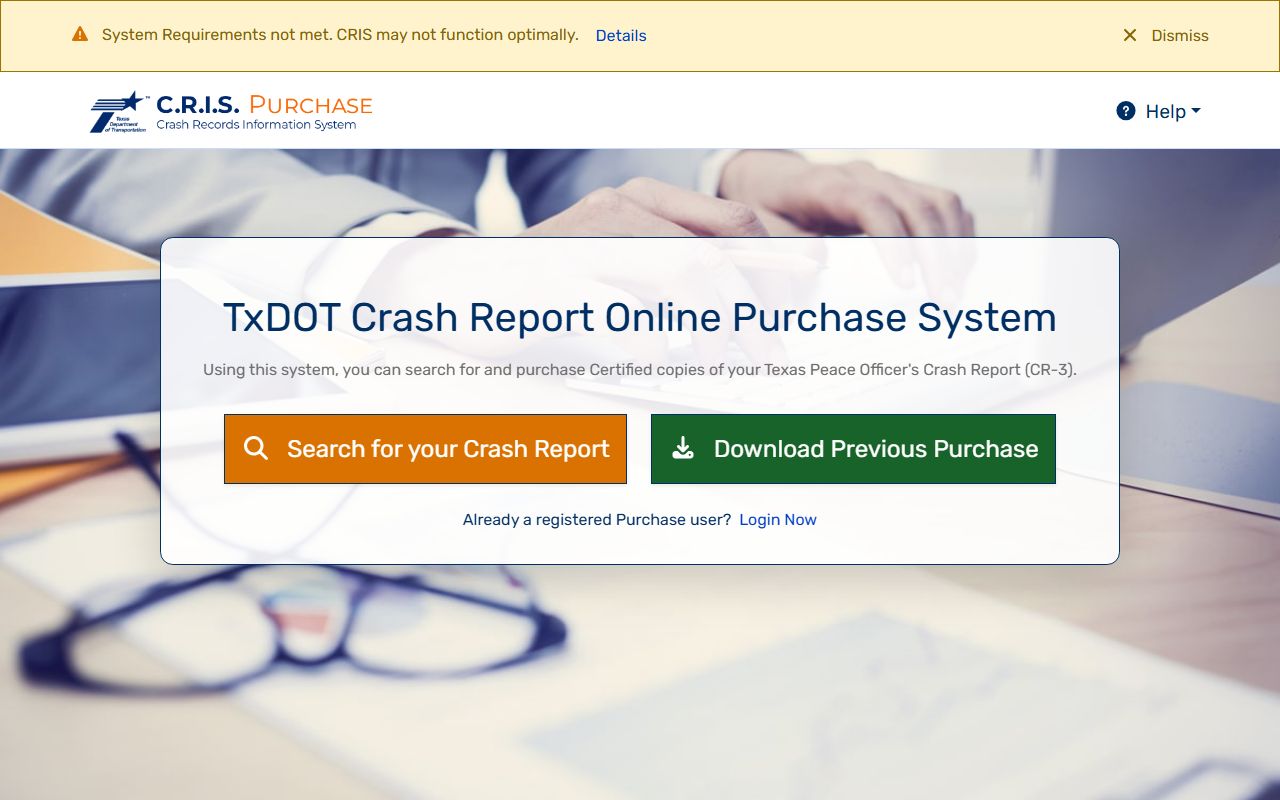
You can search by name, driver license number, VIN, license plate, or crash report ID. Certified reports cost $8.00 and uncertified copies cost $6.00.
CRIS reports include the crash location, vehicle info, driver data, contributing factors, and the officer's narrative. Private property crashes are usually not in CRIS unless there was a serious injury, death, or a specific crime. Contact the CRIS Help Desk at (512) 486-5780 or email CrashData@txdot.gov for help.
Police Records and Victim Resources
The Texas VINE system is a free service that gives custody status updates on offenders in Texas jails and prisons. It covers all 254 counties plus state prison facilities. Victims can sign up for notifications by phone at 1-877-894-8463 or online at VINELink.com. You pick how you want to be notified: phone, email, or text message. The service runs around the clock, every day of the year.
The VINE victim notification system lets you track custody changes for any offender held in a Texas jail or prison.
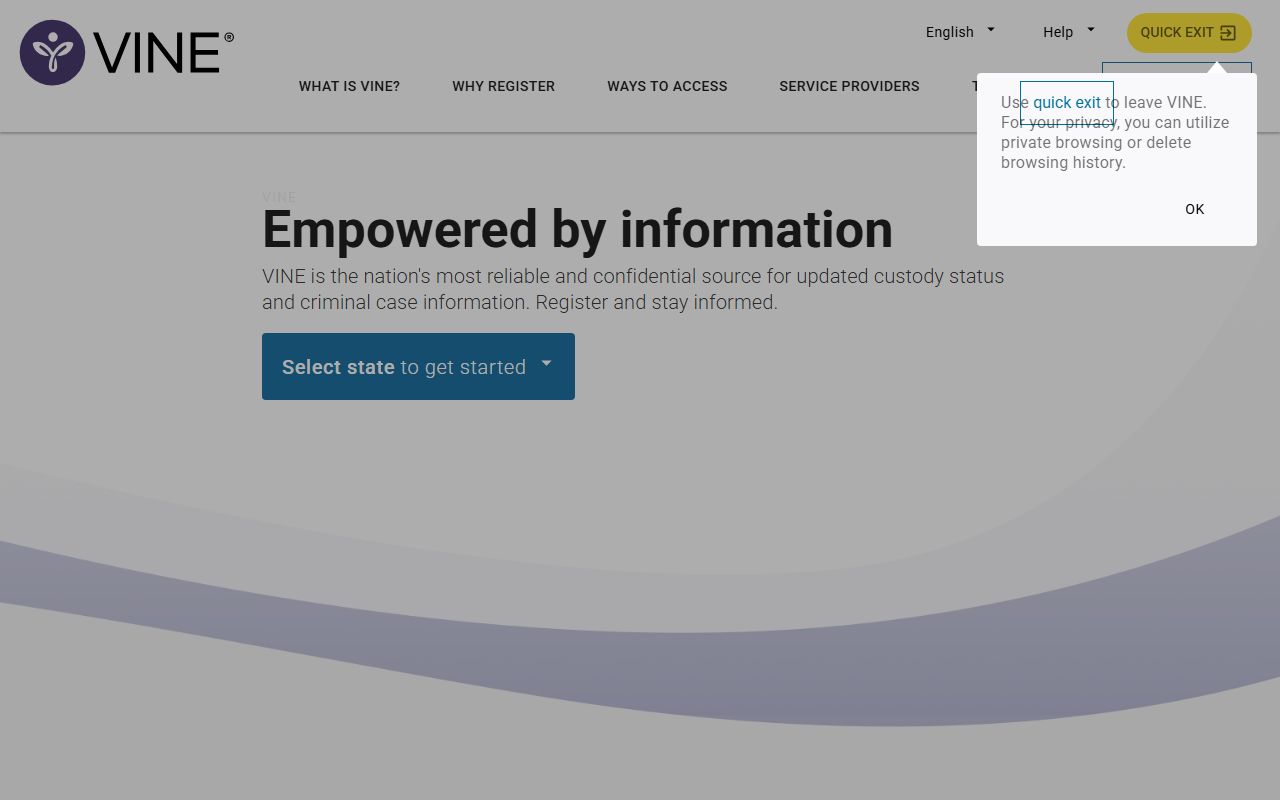
VINE sends alerts for booking, release, transfer, escape, and return to custody. Registrations can be anonymous.
The Texas Board of Pardons and Paroles reviews about 75,000 parole cases each year and grants parole to roughly 35% of eligible inmates. Victims can register to get notice of parole hearings and give input on release decisions. The Board operates under Texas Government Code Chapter 508. Call Victim Services at (800) 848-4284 to register or learn about the process.
Texas Police Officer Records
The Texas Commission on Law Enforcement regulates over 100,000 licensed peace officers, corrections officers, and telecommunications personnel. TCOLE sets training standards and investigates complaints. You can look up any officer's license status, certification history, and training records for free on the TCOLE online portal. Peace officer licenses require completion of a 700+ hour basic training academy and passing the state licensing exam. Officers need 40 hours of continuing education every 2 years to keep their license active.
The TCOLE website lets you verify officer credentials and check the status of any licensed peace officer, jailer, or telecommunications operator in Texas.

License types include peace officer, corrections officer, telecommunications operator, and jailer. TCOLE can suspend or revoke licenses for misconduct.
The Texas Commission on Jail Standards inspects county jails every year and keeps an online jail directory with capacity and population data for all Texas jails. Texas jails hold roughly 65,000 inmates daily in 241 county-operated facilities. County sheriffs serve as the jail administrator and are responsible for compliance.
Police Records in Texas Courts
Texas has 2,797 courts at every level. The Office of Court Administration provides administrative support and publishes statistical reports on caseloads. District courts handle felony criminal cases. County courts at law deal with Class A and B misdemeanors. Justice of the Peace courts cover Class C misdemeanors. Municipal courts mostly handle traffic violations and city ordinance cases. The Texas court system processes over 8 million cases annually across all court types.
The Texas Judicial Branch website provides information about the court structure, judicial directory, and public access to appellate court opinions.

Smaller counties use the CourTex case management system through OCA, while larger counties run their own online portals.
The Texas Sheriffs' Association and the Texas Police Chiefs Association are professional groups that support law enforcement agencies statewide. Both organizations provide resources and information about local police departments and sheriff's offices.
Browse Texas Police Records by County
Each of the 254 Texas counties has a sheriff's office that keeps arrest records, jail logs, and incident reports. Pick a county below to find local contact info and resources for police records in that area.
Police Records in Major Texas Cities
City police departments keep their own incident reports and arrest records. Pick a city below to find out where to go for police records in that area.