
Access Hardeman County Police Records
Hardeman County police records are managed by the Sheriff's Office in Quanah, a small city in north Texas near the Oklahoma border. The county has a low population and the Sheriff's Office is the main law enforcement agency for the area. Arrest records, incident reports, accident reports, and jail booking files are all stored locally. The Texas DPS Crime Records Division also holds statewide conviction data that covers Hardeman County. Court records from criminal cases go through the clerks at the Hardeman County Courthouse. Below you will find information on how to search for and request police records, the fees, and links to state resources.
Hardeman County Overview
Hardeman County Sheriff's Office
The Hardeman County Sheriff's Office serves as the primary law enforcement agency for the county. Based in Quanah, the office patrols rural roads, investigates criminal complaints, and runs the county jail. Deputies also handle civil process, serve warrants, and provide courthouse security.
Police records at the office include arrest reports, incident reports, and booking data. When someone is arrested and brought to the jail, a booking record is created with their name, date of birth, charges, bond amount, and photo. You can request copies of these records in person during business hours or by submitting a written request. The Texas Public Information Act gives the public access to most law enforcement records. The main exceptions are ongoing investigations and juvenile files.
| Office | Hardeman County Sheriff's Office |
|---|---|
| Address | 200 E. 3rd Street, Quanah, TX 79252 |
| Phone | (940) 663-5388 |
| Hours | Monday through Friday, 8:00 AM to 5:00 PM |
To check if someone is in the Hardeman County Jail, use the Texas VINE notification system. This free service lets you search for inmates by name and sign up for custody alerts. You get notified by phone, text, or email when their status changes.
Searching Hardeman County Police Records
The Hardeman County website lists office contact information and provides basic details about county departments.
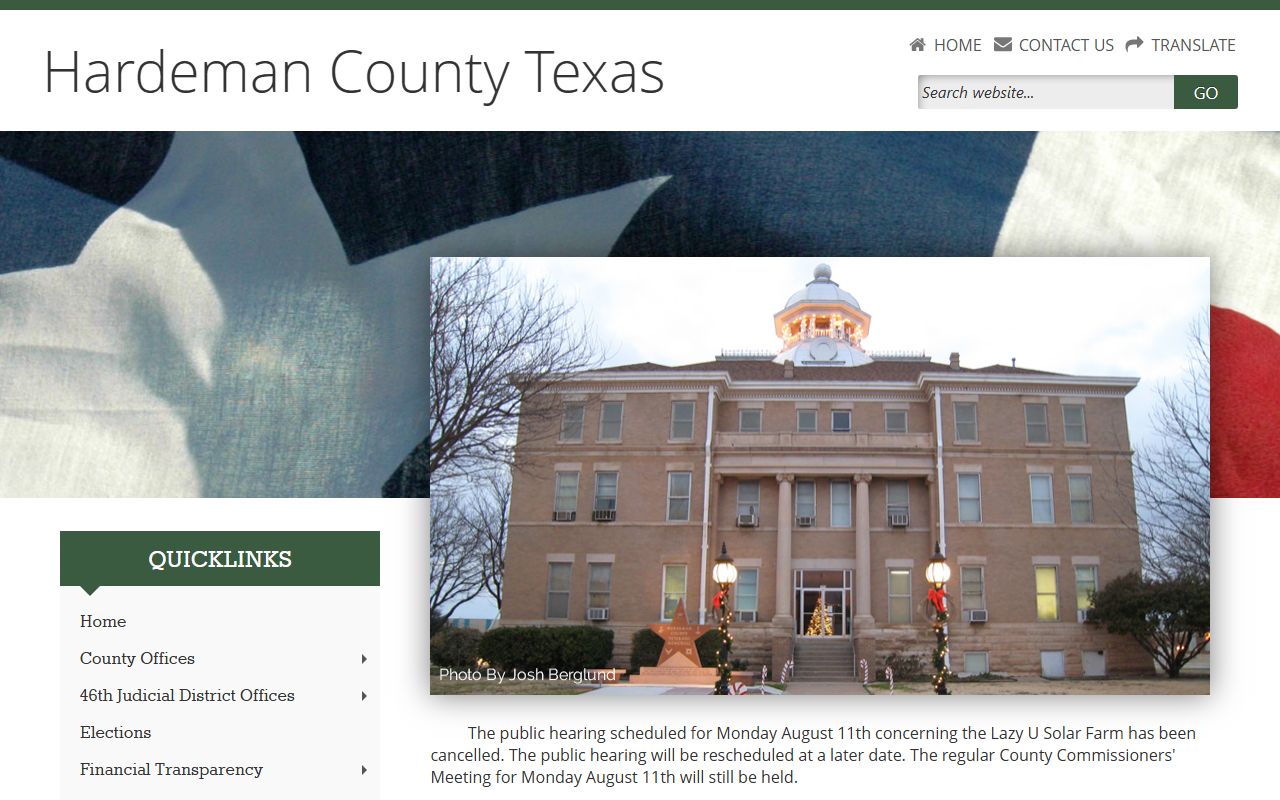
From the county site you can get phone numbers and mailing addresses for the Sheriff's Office, County Clerk, and District Clerk. It is a useful first step when you are not sure who to contact.
The Texas DPS Crime Records Division runs the Computerized Criminal History database. It has conviction records from all Texas counties dating back to 1975. To search, create an account, buy credits at $3.00 per name, and run your query. Only convictions and deferred adjudications are shown. For a full background check, fingerprint-based searches cost $25.00.
Crash reports from Hardeman County are stored in the TxDOT CRIS system. Plain copies cost $6.00 and certified copies cost $8.00. Reports are public 60 days after the incident date.
Hardeman County Records Request Process
Anyone can request police records from Hardeman County under the Texas Public Information Act. No reason is needed. Put your request in writing and include your name, contact information, and a description of the records you want. The office should respond within 10 business days.
Paper copies are $0.10 per page. Certified copies add $1.00 per document. If the request requires a lot of staff time, you may be charged $15.00 per hour for labor after two free hours. If the total is more than $40.00, the office sends you an estimate first. Some records are off limits, including ongoing investigation files and juvenile case data. If you are denied, you can contact the Texas Attorney General's open government hotline at 1-877-673-6839.
Hardeman County Criminal Court Records
Criminal court records in Hardeman County are split between two offices at the courthouse in Quanah. The County Clerk manages misdemeanor case files. The District Clerk handles felony records. Hardeman County is part of the 46th Judicial District. Court records show charges, plea entries, hearing dates, motions, and the final outcome of each case.
Court records are different from police reports. The police report is the officer's account of an incident. Court records follow the legal process from charges to verdict or dismissal. To find out how a criminal case ended, you need the court file. Visit the courthouse to request copies or search in person.
The TDCJ Offender Search is another free tool for looking up people in state prison. It shows the facility, charges, and projected release date. The TCOLE license lookup verifies peace officer certifications statewide. The Texas courts website has general information about how the state court system works.
Nearby Counties
These counties border Hardeman County. Police records are filed where the event occurred.