
Anderson County Police Records
Anderson County police records are kept by the Sheriff's Office in Palestine, Texas. The county sits in East Texas and covers a mix of rural land and small towns. If you need to look up an arrest report, check on a case, or get a copy of an incident file, the Sheriff's Office is the main place to start. You can also reach out to the Anderson County Clerk for court-related records tied to criminal cases. Palestine serves as the county seat, and most law enforcement records for the area run through the offices there. Both online tools and in-person visits can help you track down what you need.
Anderson County Overview
Anderson County Sheriff's Office
The Anderson County Sheriff's Office is the main law enforcement agency for the county. It handles patrol, criminal investigations, and the county jail. The office is based in Palestine and serves all of the unincorporated parts of the county. Deputies respond to calls, enforce traffic laws, and work with state and federal agencies on joint cases. If you want police records from anywhere in Anderson County outside of a city police department, this is where they are held.
Staff at the Sheriff's Office maintain records of incident reports, accident reports, and arrest files. They follow state rules on how long to keep records and what can be shared with the public. The office also runs the 911 dispatch center for Anderson County, which means they log all emergency calls across the area. You can call or visit the office during business hours to ask about records. The Sheriff's Office also serves civil process papers like warrants and subpoenas for local courts.
| Office | Anderson County Sheriff's Office |
|---|---|
| Address |
1200 E. Lacy Street Palestine, TX 75801 |
| Phone | (903) 729-6068 |
| Hours | Monday through Friday, 8:00 AM to 5:00 PM |
| Website | Anderson County Sheriff |
The Sheriff's Office also runs a warrants division. They track and serve arrest warrants from local courts. If you think there may be an open warrant in Anderson County, you can call the office or check with the District Clerk. The office provides courthouse security and maintains a property and evidence room for seized items and evidence tied to pending cases.
How to Get Anderson County Police Records
Getting police records in Anderson County starts with knowing what type of record you need. Incident reports, arrest logs, and accident reports are all different. Each may come from a different office or have different rules about who can see them. The Sheriff's Office handles most law enforcement files, but some records may sit with the District Clerk or County Clerk depending on the case.
Texas law gives the public a right to request government records. The Texas Public Information Act (Government Code Chapter 552) says that most government records are open to the public. You do not have to give a reason for your request. The law requires agencies to respond promptly, which usually means within 10 business days. If they want to hold back any part of a record, they must ask the Texas Attorney General for a ruling within 10 business days.
To request police records from the Anderson County Sheriff's Office, put your request in writing. Include the date of the incident, the names of people involved, and any case or report numbers you have. You can drop off the request in person at the Sheriff's Office in Palestine. You can also mail it or call to ask about their process. Fees for copies are set by state law. Standard paper copies cost $0.10 per page, and the first 50 pages may be free if the records are in one spot and don't need much work to pull together.
Note: Some police records tied to open investigations may be withheld until the case is closed or charges are filed.
Anderson County Clerk Records
The Anderson County Clerk's Office holds criminal misdemeanor records and civil case files for the county courts. The office sits at 500 N Church Room 10 in Palestine. Hours are 8:00 AM to 12:00 PM and 1:00 PM to 5:00 PM, Monday through Friday. Staff can help you look up case records in person, and they have public search computers set up for people who want to dig through files on their own.
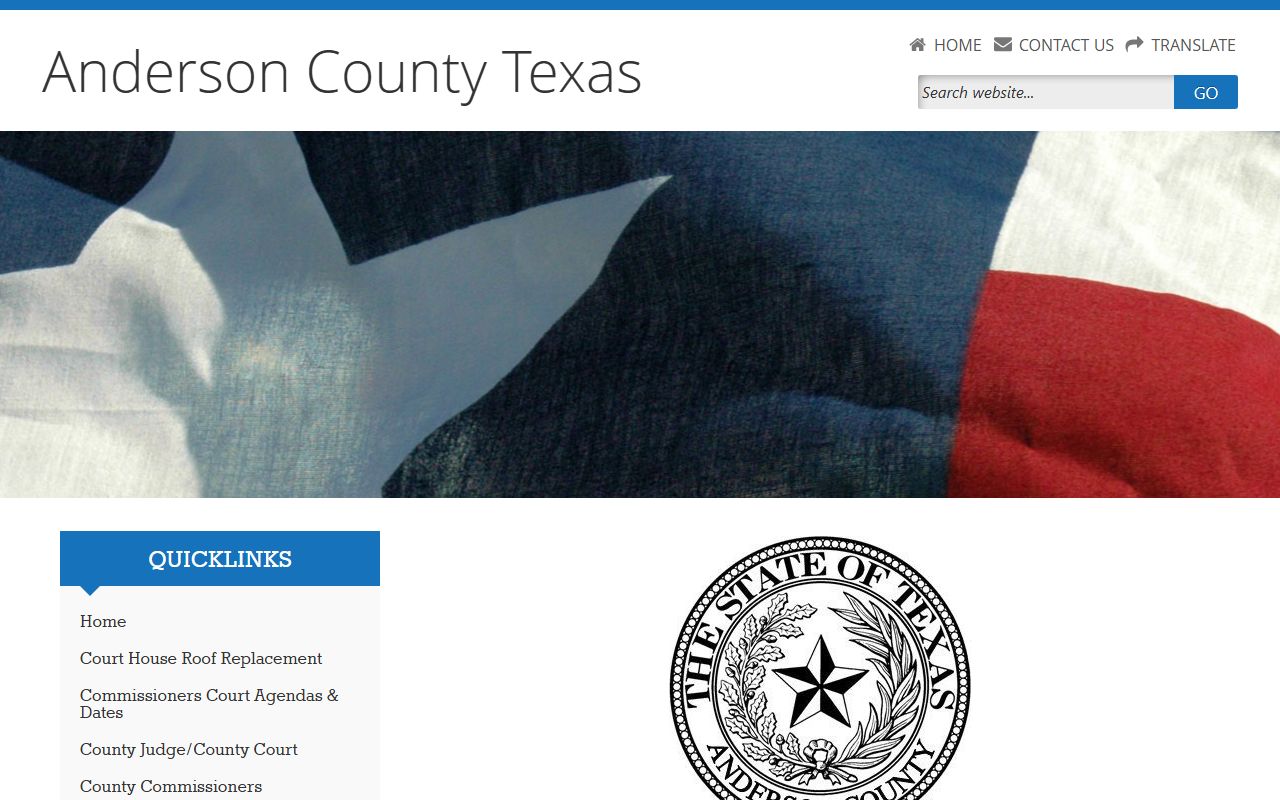
The screenshot below shows the Anderson County Clerk's website, which lists office hours and services.
The Clerk's Office accepts cash, check, and credit card for copies and certified documents. They also handle real property records, marriage licenses, and vital records, but the criminal case files are what matter if you are looking for police-related court records.
The Anderson County District Clerk keeps records for the 87th District Court. That court handles felony criminal cases and civil matters over $200,000. If you need felony case files, that is the office to contact. They manage the court docket and collect filing fees and court costs. The District Clerk works with the Sheriff's Office on jury summons and other court functions.
Texas Police Records Resources
Beyond the local offices in Anderson County, the state of Texas runs several databases that hold police records. The Texas DPS Crime Records Division keeps the statewide criminal history system. It has over 15 million conviction records going back to 1975. Public access is limited to conviction data and deferred adjudication records. Arrest records without a conviction are not public through DPS. You can run a name-based search for $3.00 per credit plus transaction fees.
The TDCJ Offender Search lets you look up people in state prison or on parole. You can search by name, TDCJ number, or SID number. The database shows current location, offenses, and projected release dates. It covers inmates going back to 1980 and gets updated every night. This is a free tool and does not cost anything to use.
For crash reports, the TxDOT CRIS system stores all police-reported motor vehicle crashes in Texas. Reports become public after 60 days. You can buy a certified copy for $8.00 or an uncertified one for $6.00. If someone in Anderson County was involved in a car wreck, this is where you find that report.
The Texas Commission on Law Enforcement handles officer licensing. You can verify if a peace officer is certified through their free online lookup. TCOLE also tracks complaints and disciplinary actions against officers.
Victim Services in Anderson County
Crime victims in Anderson County can use the Texas VINE system to track an offender's custody status. VINE is free and lets you sign up for alerts by phone, email, or text. You get notified when someone is booked, released, transferred, or escapes. The service runs 24 hours a day and covers all 254 Texas counties.
The Texas Board of Pardons and Paroles also provides victim notification for parole hearings. If someone convicted of a crime in Anderson County is up for parole, victims can register to get updates and provide input on the release decision. Victim services coordinators are on staff to help through the process.
Anderson County Records Fees
Fees for police records in Anderson County follow the state schedule set by the Texas Attorney General. Paper copies run $0.10 per page for letter size and $0.15 per page for legal size. If your request takes a lot of staff time to fill, labor charges can apply at $15.00 per hour for general work. The first 50 pages are often free when the records are easy to pull.
If you need crash reports from Anderson County, those go through the TxDOT CRIS system at $6.00 to $8.00 per report. Court records from the County Clerk or District Clerk may have their own copy fees. Certified copies cost more than plain ones. The County Clerk accepts cash, check, and credit card.
Note: Fees can change, so call the office first to confirm what your request will cost before you send payment.
Police Records and Texas Open Records Law
The Texas Public Information Act is the backbone of how police records get released to the public. Under Government Code Chapter 552, any person can ask a government body for records. The agency must respond promptly. If they want to withhold something, they have to get the Attorney General's approval first. Criminal penalties exist for officials who hide public records on purpose.
Some law enforcement records have exceptions. Pending investigations are one big one. Agencies can hold back records tied to an active criminal case until it wraps up. Under Texas Code of Criminal Procedure Article 2.139, law enforcement agencies must also report certain data on officer-involved incidents. These reports go to the state and become part of the public record after the investigation closes. Personnel files and internal affairs records may also be exempt from disclosure in some cases.
If the Anderson County Sheriff's Office denies your request, ask for the Attorney General ruling letter. You can appeal that ruling in state district court within 30 days. The Attorney General's open government hotline can answer questions at (512) 478-6736.
Cities in Anderson County
Anderson County includes Palestine, Elkhart, and several smaller communities. Palestine is the largest city and the county seat. All police records for the unincorporated areas go through the Anderson County Sheriff's Office. City police departments in Palestine and other towns keep their own records for incidents inside city limits.
For police records in Anderson County, contact the local police department or the Sheriff\'s Office. For records from any city in the county, contact the local police department or the Sheriff's Office in Palestine.
Nearby Counties
These counties border Anderson County. If you are not sure which county handles a case, check the location of the incident. You must contact the right county for records.